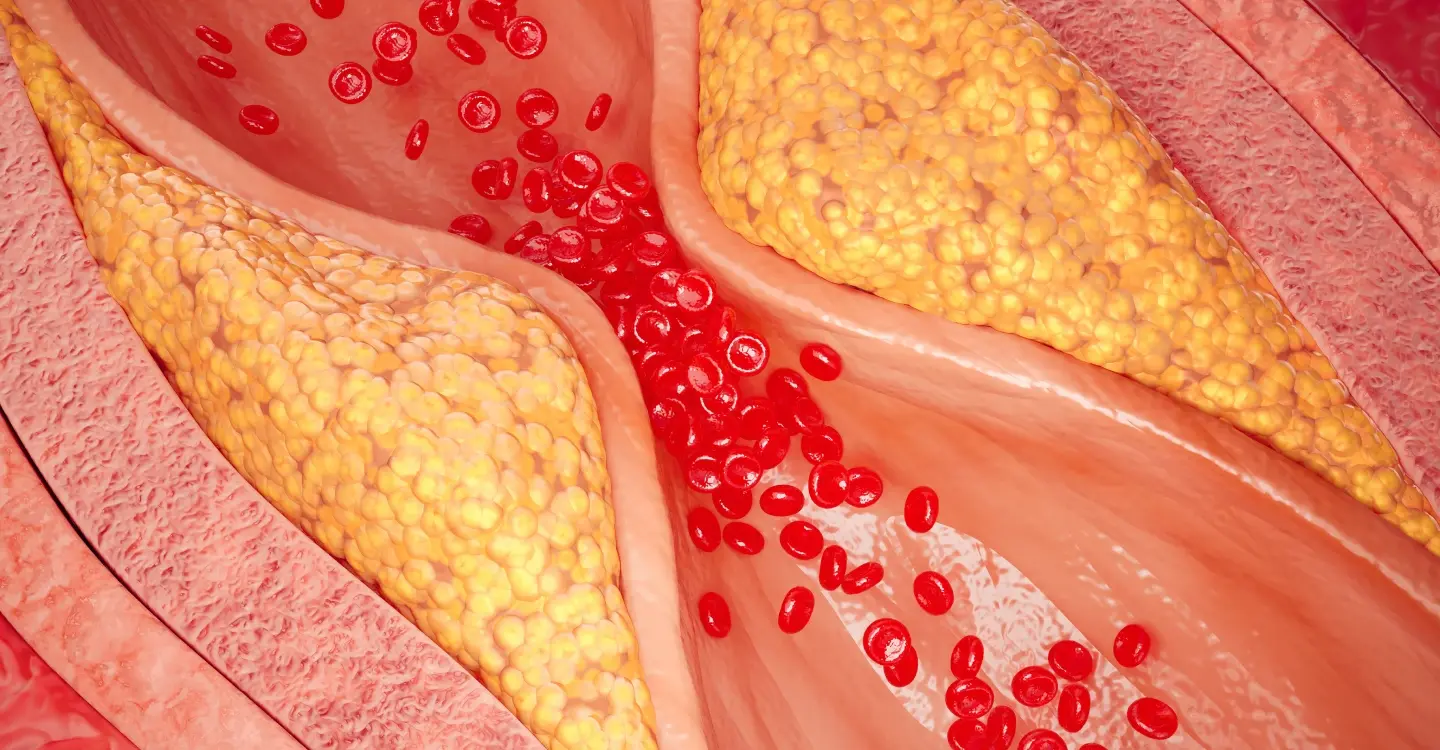
There’s a lot going on in the heart health world right now. The American Heart Association (AHA) and the American College of Cardiology (ACC) recently published updated guidelines on the management of dyslipidemia which recommend lipid screening beginning at age 19. Shortly after, a team of Canadian cardiology experts published a clinical framework for assessment and management of lipoprotein(a), one of the most overlooked heart disease risk factors out there.
So we've had lipids on the brain at NiaHealth. But what does any of this actually mean for you?
The Tests Most Canadians Aren't Getting
Two useful blood markers for heart disease risk—apolipoprotein B (apoB) and lipoprotein(a), or Lp(a)—aren't part of a standard lipid panel in Canada. Even though Lp(a) screening is recommended for everyone, fewer than 1 in 10 people actually get it done (Thanassoulis et al. 2026). ApoB is a bit more nuanced: while many people at risk of cardiovascular disease will be identified through the tests included on a standard lipid panel–such as LDL-C and non-HDL-C–a large body of evidence demonstrates that apoB identifies people who are missed by the standard tests (Sniderman et al., 2024).
At NiaHealth, every test panel includes apoB, and Lp(a), as well as a standard lipid panel which includes LDL-C and non-HDL-C. All four of these tests provide information about the burden of atherosclerosis-causing lipids–but apoB and Lp(a) together cast the widest net.
We were curious about how many of our users have at-risk levels of these four markers, so we delved into the data.
Over 30% of First-time NiaHealth Users Were Identified as Being At Risk
We looked at baseline levels of atherogenic lipid markers among NiaHealth users and determined the proportion who exceeded our “at-risk” cutoff for each.
Here's the breakdown:
- LDL-C: 30% of users at risk (≥3.5 mmol/L)
- Non-HDL-C: 25% at risk (≥4.2 mmol/L)
- apoB: 30% at risk (>1.0 g/L)
- Lp(a): 19% at risk (≥100 nmol/L)
This means that nearly 1 in 3 NiaHealth users had at least one at-risk lipid marker.
Keep in mind that our "at-risk" thresholds are based on the levels where research shows that the risk of heart disease and early death starts to climb. This means that some of our cutoffs are lower than what you'll see flagged on a standard lab printout. That's because we look at things through a preventative lens—catching risk early gives you a head start.
So What Do We Do About It?
When you have an “at-risk” result, we don't just hand you a number and send you on your way. We look at the whole picture—your health history, lifestyle, and other test results—to figure out your overall cardiovascular risk. Then we work with you on changes that move the needle.
Food First
Nutrition is one of the most powerful levers you have to lower your risk of heart disease. The strongest evidence is for the Mediterranean diet. Compared to the standard western diet, adopting a Mediterranean diet lowers cardiovascular risk by approximately 30%.
When we narrow the focus to lowering your lipid levels:
- The Mediterranean diet lowers LDL-C by up to 8-15% and apoB by 10-15% (Hareer et al. 2025; Richard et al. 2014; Ferro et al. 2020)
- The Portfolio Diet (built around nuts, legumes, whole grains, fruits, and veggies) lowers LDL-C by ~17% and apoB by 23%—about what you'd get from a low-dose statin (Blumenthal et al. 2026; Jenkins et al. 2003).
- Vegetarian and vegan diets lower LDL-C by 7-10% and apoB by 10-14% (Blumenthal et al. 2026; Koch et al. 2023).
- Not ready to overhaul everything? Just swapping saturated fats (red meat, butter, full-fat dairy, palm oil) for unsaturated ones (fish, nuts, flax, chia, olive oil, avocado) can cut atherogenic lipid markers by about 5% (Blumenthal et al. 2026).
- Eating more fruits, veggies, fibre-rich foods, and a daily serving of nuts can also drop those numbers by around 5% (Blumenthal et al. 2026).
Move Your Body
A consistent exercise program that includes 150 minutes of moderate-to-vigorous cardiovascular activity and 2 or more resistance training sessions per week can lower heart disease risk by approximately 25%. When it comes to lipid levels, both cardio and resistance training improve atherogenic lipids by about 5% (Thompson et al. 2003; Eckel et al. 2014).
Stack Them Together
Combining nutrition changes with regular exercise can cut cardiovascular disease risk by half, and improve lipid levels by around 15% (Paluch et al. 2024; Varady and Jones 2005).
What About Lp(a)?
Here's the tricky part: neither lifestyle changes nor current medications significantly lower Lp(a). (Though promising new drugs are in clinical trials with results expected this year.) If your Lp(a) is high, we focus on aggressively managing every other cardiovascular risk factor we can—and we recommend getting first- and second-degree relatives screened, too, since Lp(a) is largely genetic.
In every other case, we re-test your lipids after lifestyle changes to see how you're responding. (We skip the Lp(a) re-test, since it doesn't change much.)
How Are NiaHealth Users Actually Doing?
This is where it gets interesting. We looked at users who had both a baseline and a follow-up test to see whether the needle was moving*:
- apoB at-risk dropped to 24%—a 20% relative risk reduction
- LDL-C at-risk dropped to 28%—a 10% relative risk reduction
- Non-HDL-C at-risk dropped to 23%—a 10% relative risk reduction
The takeaways:
- Things are moving in the right direction. Fewer people are landing in the at-risk zone at follow-up.
- We still have work to do. Follow-up testing is a chance to check in—sometimes that means recommitting to lifestyle changes, and sometimes it means a bigger conversation about what's next.
- Lipid numbers are useful, but they're not the whole story. The real question is: how does your overall cardiovascular risk shift over time, and who actually goes on to develop heart disease? Those answers take years to gather.
*A Note on the Numbers
The data presented here only include users with both a baseline and a follow-up test, and they don't account for everyone's full health history or other biomarkers. As our research program at NiaHealth grows, we'll keep sharing what we're learning—about how users are doing, and which behaviours actually move the needle on health.
What Should You Do Next?
For now, if you don't know your apoB or Lp(a) levels, that's the first place to start. You can't change what you can't see.
Our editorial standards & process
At NiaHealth, our mission is to make proactive health possible for all Canadians—by combining science with humanity. We believe that rigorous, evidence-informed health information should never feel out of reach. Every word we publish is intentional. We choose language that empowers rather than overwhelms, clarifies rather than complicates, and respects the lived experiences behind every health question. Learn more here.
.webp)