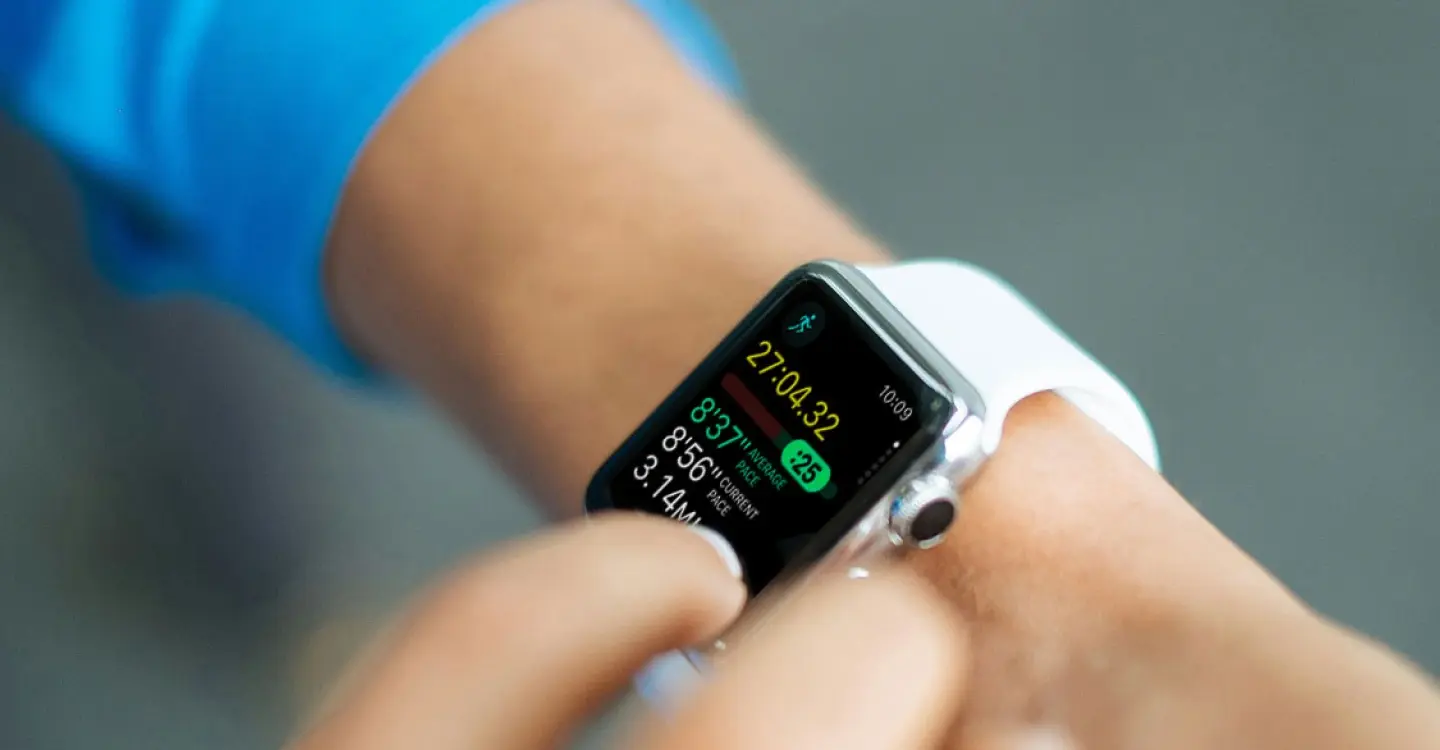
This is one of two companion pieces to our three-part NiaHealth series on exercise intensity (Part 1: defining intensity, Part 2: why it matters, Part 3: how to measure it). This post asks how accurate the numbers on your wrist really are. The other companion post asks what your watch's "zones" — including the (in)famous Zone 2 — actually mean.
After a workout, your watch tells you that you spent 48 minutes in "active" zones, and hit a peak heart rate of 168. How much of it can you believe? In this post, we’ll tackle the answer to that question, focusing on how wearables use heart rate and motion sensor data to estimate exercise intensity, and what the evidence says about how accurate they are. First up is heart rate.
How accurate is your wearable's heart rate?
Let's start with the good news. For most people, the heart rate a wearable reports is reasonably accurate. Wrist-worn watches like the Apple Watch, Fitbit, Garmin, and Galaxy track heart rate well during steady cardio, agreeing closely with medical-grade ECG readings (within about ±3%).1,2 If you want the most precision, though, a chest strap beats a wrist sensor.2
If you are using a wearable to monitor your heart rate during exercise, there is an important catch for hard workouts: at higher intensities, wearables tend to under-read your heart rate, which could push you to work harder than you realize.3 They’re also not great for shorter high-intensity interval work (less than 4 minutes, for example) because your heart rate can lag behind your effort.
So the raw heart rate number is generally trustworthy during steady cardio. The trickier question is what happens next — when that number gets sorted into a "zone." That's the subject of our companion post.
Can your wearable measure intensity from movement?
Beyond heart rate, most wearables can also estimate intensity from an accelerometer. An accelerometer is a motion sensor. Much like a pedometer that counts steps, it tracks how often and how forcefully you move, then turns that into a "count" — the bigger the count, the higher the intensity.4 Several large studies from the UK Biobank and the US NHANES cohort have shown that accelerometer activity predicts how long people live, with higher-intensity movement (that is, moderate-to-vigorous physical activity, or MVPA) giving the biggest benefit.5–7
Most wearables have this capability, and researchers have set cut-offs to sort the data into light-, moderate-, and vigorous-intensity activity. In theory, that's a great way to both track your intensity and see how it translates into health benefits. However, in practice, consumer wearables run into some real limits.
The research-grade accelerometers used in studies can estimate intensity from movement alone. Most consumer wearables don't — they use proprietary algorithms to blend accelerometer and heart rate data. Because those algorithms aren’t publicly available, you can't separate out the movement data, and it's harder for outside researchers to check the results. And when researchers do check, the results aren't reassuring. A 2024 review spanning 653 studies found that intensity was among the things consumer wearables measured least accurately, and accuracy varied widely by brand, model, and setting.8
Individual studies help to illustrate this point. A 2026 study found that wearables tend to underestimate MVPA compared with research-grade devices — by as much as 46%.9 The errors grew with intensity: devices that were fairly accurate during light activity got worse during vigorous activity. A 2021 study comparing three wrist wearables (two Fitbits and the Apple Watch 2) against a research-grade device found that all three consumer wearables underestimated MVPA by 45–55%.10Yet other studies found the opposite — some Fitbits overestimated MVPA by up to 90 minutes a day.8,11
There's one more limit: accelerometers aren’t great at accurately measuring activities that don't involve much whole-body motion or movement throughout space. So they can undercount MVPA for people who do a lot of cycling or stationary weightlifting.12
The bottom line: accelerometer data has real promise, and research backs up the link between research-grade readings and health outcomes. But consumer wearables aren't yet at the point where they can give you accurate, validated numbers.
The takeaway
So — can you trust the numbers your smartwatch reports? Partly. The heart rate it shows during steady cardio is generally accurate, within about ±3%, though it tends to under-read during your hardest efforts. Its movement-based "active minutes" are shakier: consumer accelerometers can miss or overshoot your real moderate-to-vigorous time by wide margins, and they barely register cycling or weightlifting.
None of this means you should toss your wearable. It means you should hold its numbers loosely. Trust the heart rate during steady cardio, treat the calorie and active-minute counts as rough estimates, and always pair whatever your watch says with how the effort actually feels.
And remember: an accurate number is only half the story. What that number gets turned into — a "zone" — is a separate question, and a surprisingly messy one. That's what we take on in the companion post on heart-rate zones and Zone 2.
This article is for general education and isn't a substitute for personalized medical advice. Talk to a qualified health professional before starting a new exercise program, especially if you have an existing health condition.
Our editorial standards & process
At NiaHealth, our mission is to make proactive health possible for all Canadians—by combining science with humanity. We believe that rigorous, evidence-informed health information should never feel out of reach. Every word we publish is intentional. We choose language that empowers rather than overwhelms, clarifies rather than complicates, and respects the lived experiences behind every health question. Learn more here.

.webp)