.webp)
The popularity of GLP-1s continues to grow, and so do the number of conditions they're approved to treat. What started as a class of medications for type 2 diabetes moved into weight loss, and has since expanded into treating fatty liver disease (also known as metabolic dysfunction-associated steatohepatitis, or MASH), specific cardiovascular diseases, obstructive sleep apnea, and the list continues to grow. Researchers are actively studying GLP-1s for chronic kidney disease, heart failure, peripheral artery disease, osteoarthritis pain, substance use disorder, and autoimmune conditions like psoriasis and ulcerative colitis.
But GLP-1s aren't a take-it-and-forget-it cure-all. As the list of what they can do keeps growing, so does the importance of tracking what they're actually doing for you, and to you.
Right now, most testing guidance for people on GLP-1s focuses on one of two things: what risks to screen for before starting, and what to check if someone feels unwell. Those are necessary, but there’s also a role for tracking changes over time on a GLP-1–even if you feel well. This provides an opportunity to address developing issues–like iron deficiency or muscle loss–before they cause symptoms. It also offers a chance to confirm that the GLP-1 is working to improve inflammation, liver fat, and insulin dynamics–things that weight changes alone won’t tell you.
How NiaHealth's biomarkers can support GLP-1 users
There are three different ways to think about blood tests when you are taking GLP-1s, and each gives you something different:
- Reactive Testing: done when someone is feeling sick, to diagnose what's happening right now. Normally we are worried about pancreatitis, dehydration, thyroid problems, or malnutrition.
- Monitoring: done on a routine schedule during treatment, to catch biomarkers trending in the wrong direction before they become symptomatic.
- Preventative Testing: done to show that chronic disease risk is genuinely improving, not just that weight is coming down.
Some markers show up in more than one category. The same test can mean something different depending on whether it's answering "what's wrong right now," "is something starting to go wrong," or "is this working the way it should?"
1. Reactive Testing
Order these when a symptom shows up — to find out what's causing it
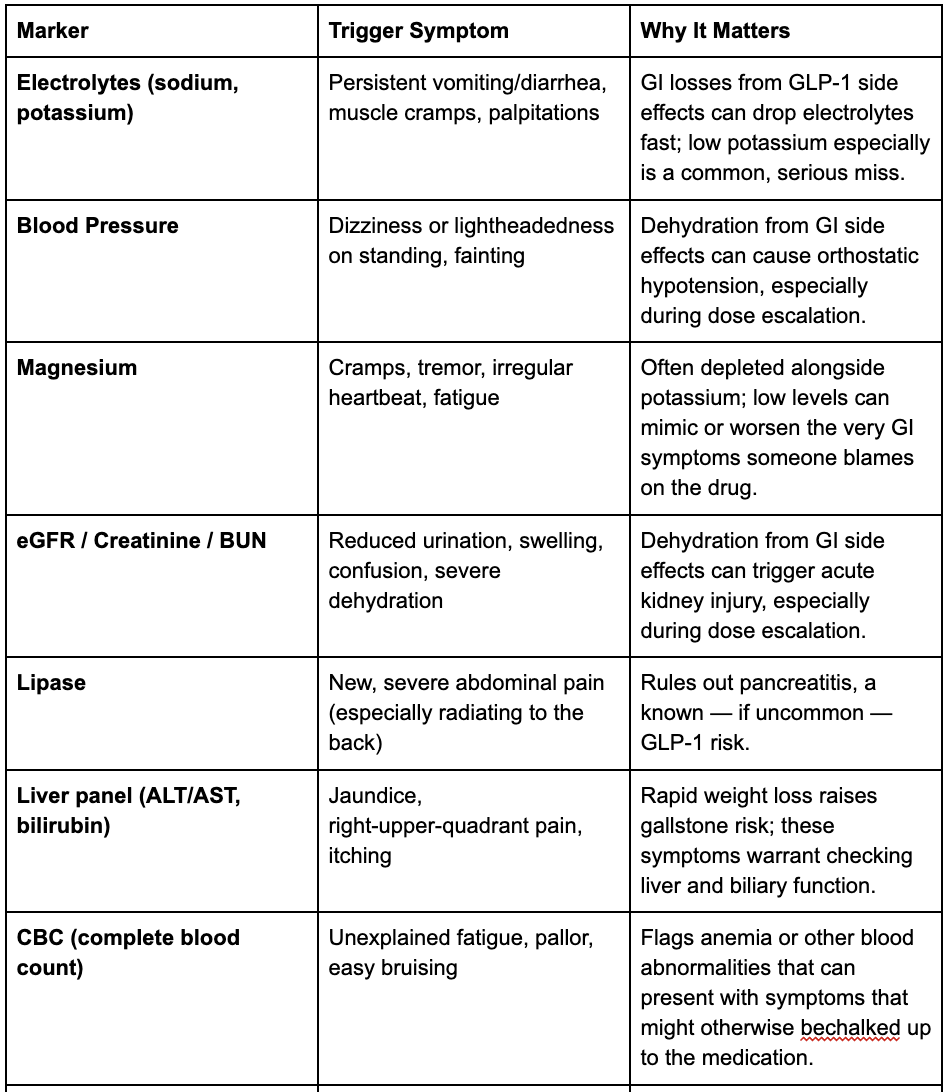
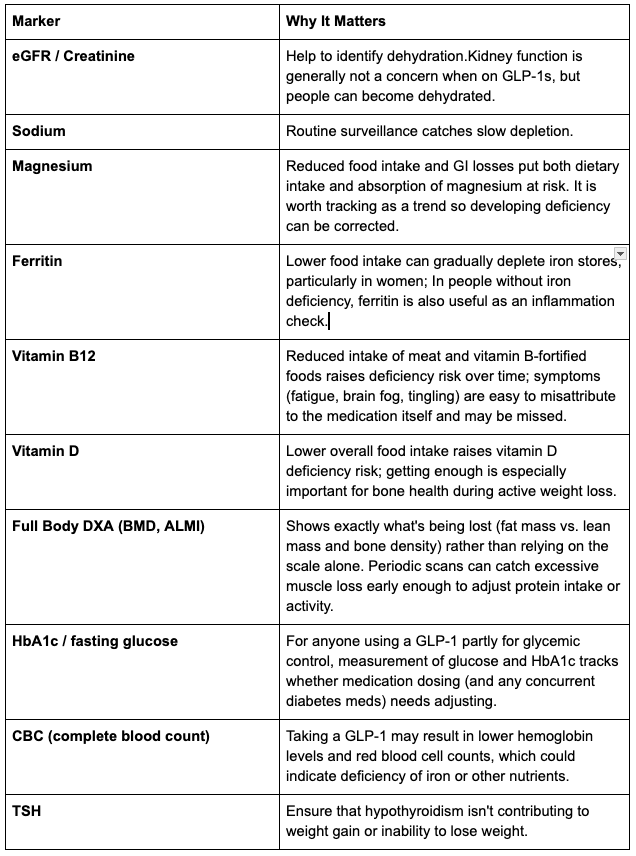
2. Monitoring
These tests are worth checking periodically to catch problems before they become symptoms
3. Preventative Testing
Order these to show that chronic disease risk is actually going down
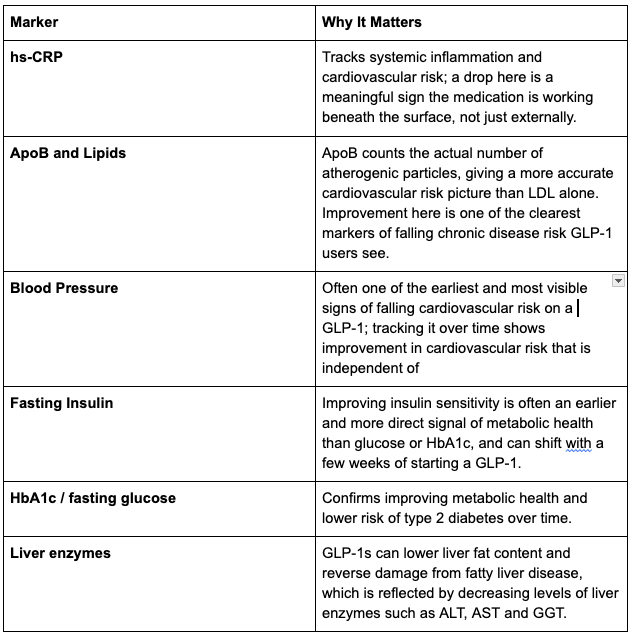
The approach to blood testing on a GLP-1, depends on the question being asked. Reactive tests answer "what's wrong right now." Monitoring tests answer, "what am I at risk of?" Preventative tests answers, “what is improving?”.
Our editorial standards & process
At NiaHealth, our mission is to make proactive health possible for all Canadians—by combining science with humanity. We believe that rigorous, evidence-informed health information should never feel out of reach. Every word we publish is intentional. We choose language that empowers rather than overwhelms, clarifies rather than complicates, and respects the lived experiences behind every health question. Learn more here.